Habitat and Care
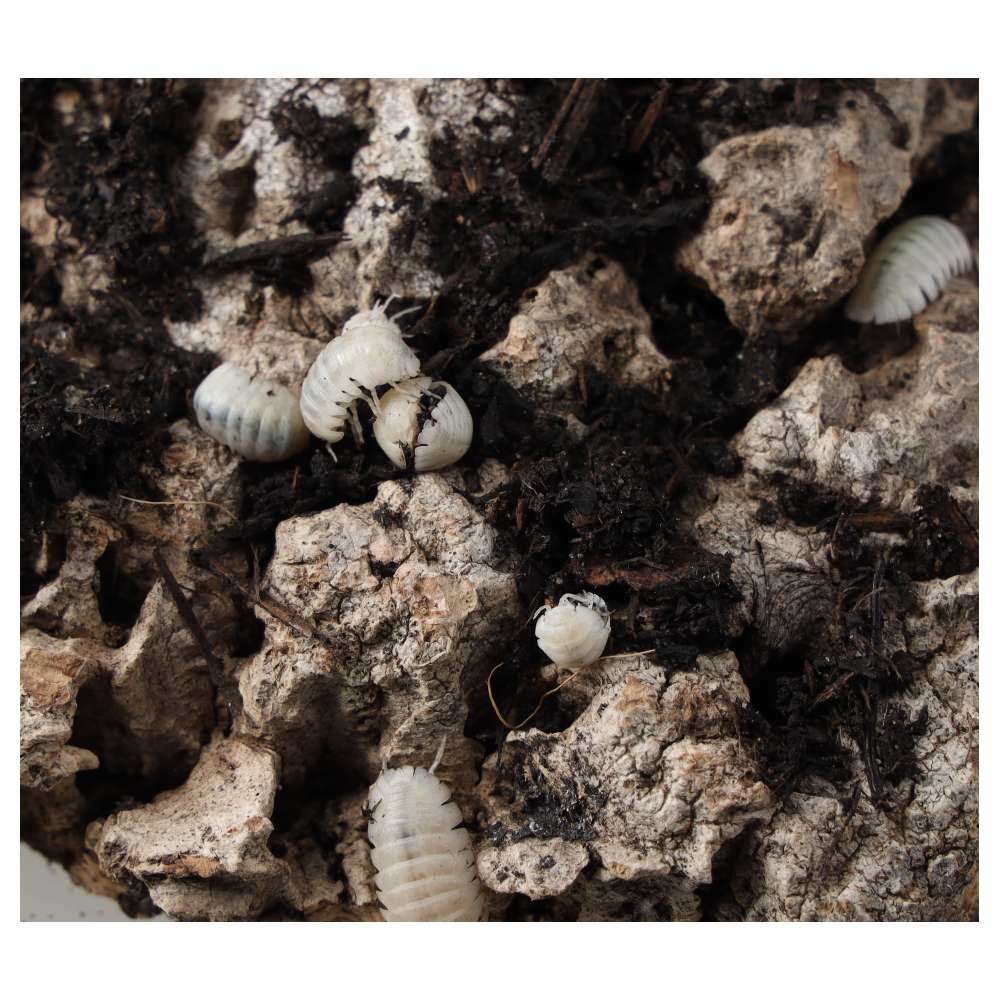
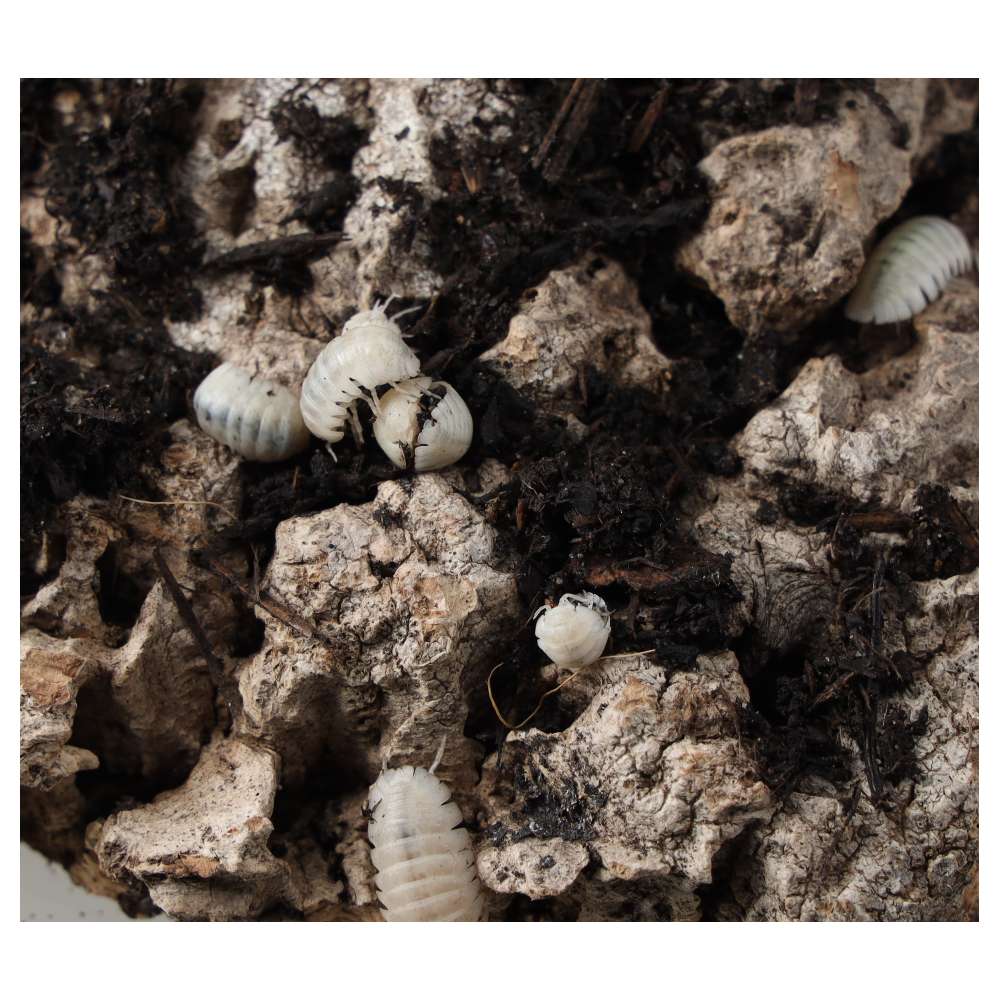
T-Albino Isopods Isopods thrive in a humid, forest-like environment with plenty of hiding spots and moisture. They prefer a substrate mix of coconut fibre, leaf litter, and decaying wood, which mimics their natural habitat and provides the necessary nutrients for their growth and reproduction. Maintaining a humidity level of around 70-80% is crucial for their well-being. Regular misting and the inclusion of moisture-retentive materials like sphagnum moss can help achieve this. A temperature range of 18-24°C is ideal for these isopods, ensuring their comfort and activity.
Bio-Active Terrariums and Vivariums
Incorporating Snow White Isopods into a bio-active terrarium or vivarium enhances the ecosystem’s overall health and cleanliness. These isopods are natural decomposers, consuming decaying organic matter, leftover food, and mould. This behaviour helps maintain a clean and balanced environment, reducing the need for frequent substrate changes and promoting a healthier habitat for other inhabitants, such as reptiles and amphibians. Their presence also aids in aerating the soil, further benefiting the ecosystem.
Starting Your Own Colony
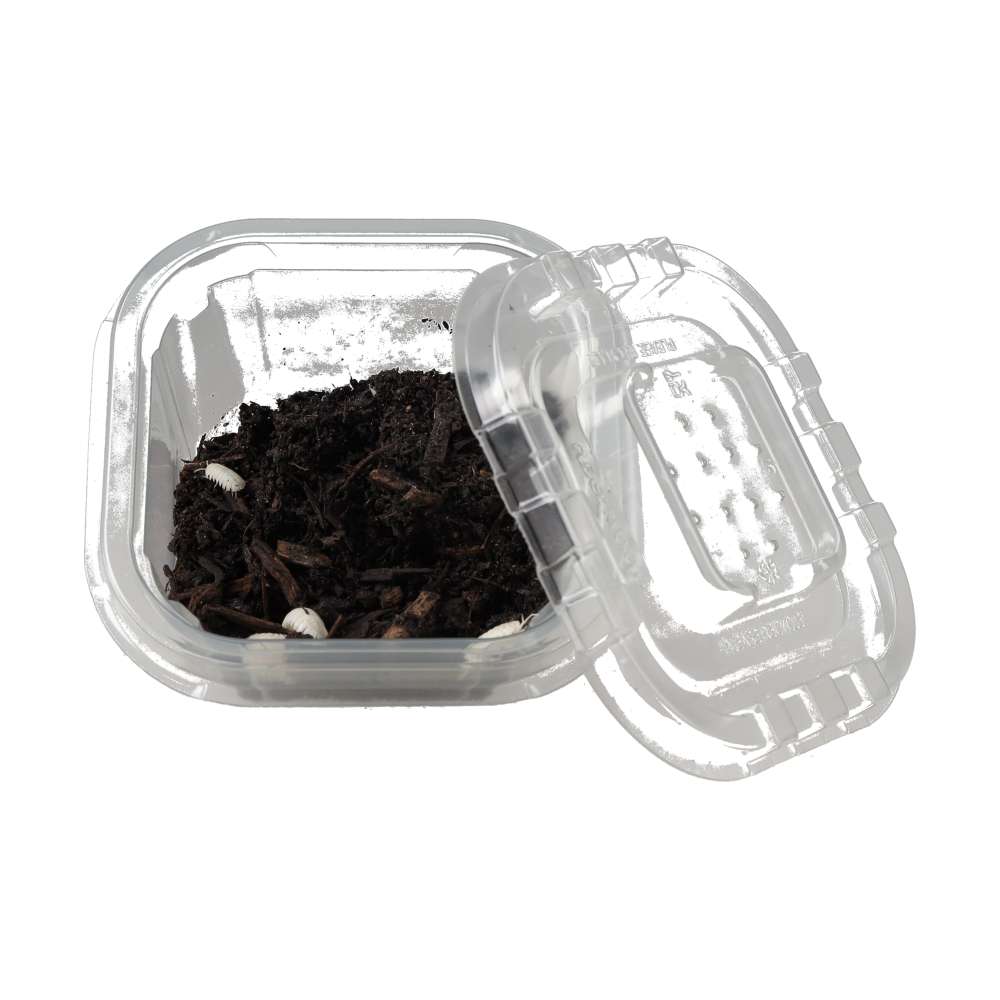
Establishing a colony of T-Albino Isopods is a rewarding and straightforward process. Begin with a small group of at least 10-15 individuals to ensure genetic diversity and successful breeding. Provide a spacious enclosure with a well-prepared substrate, as previously described. Introduce various hiding spots, such as cork bark, egg cartons, and small caves, to create a safe and stimulating environment. Regularly monitor humidity, temperature, and food supply, ensuring they have a consistent source of decaying organic matter and occasional supplemental foods like vegetables and fish flakes.