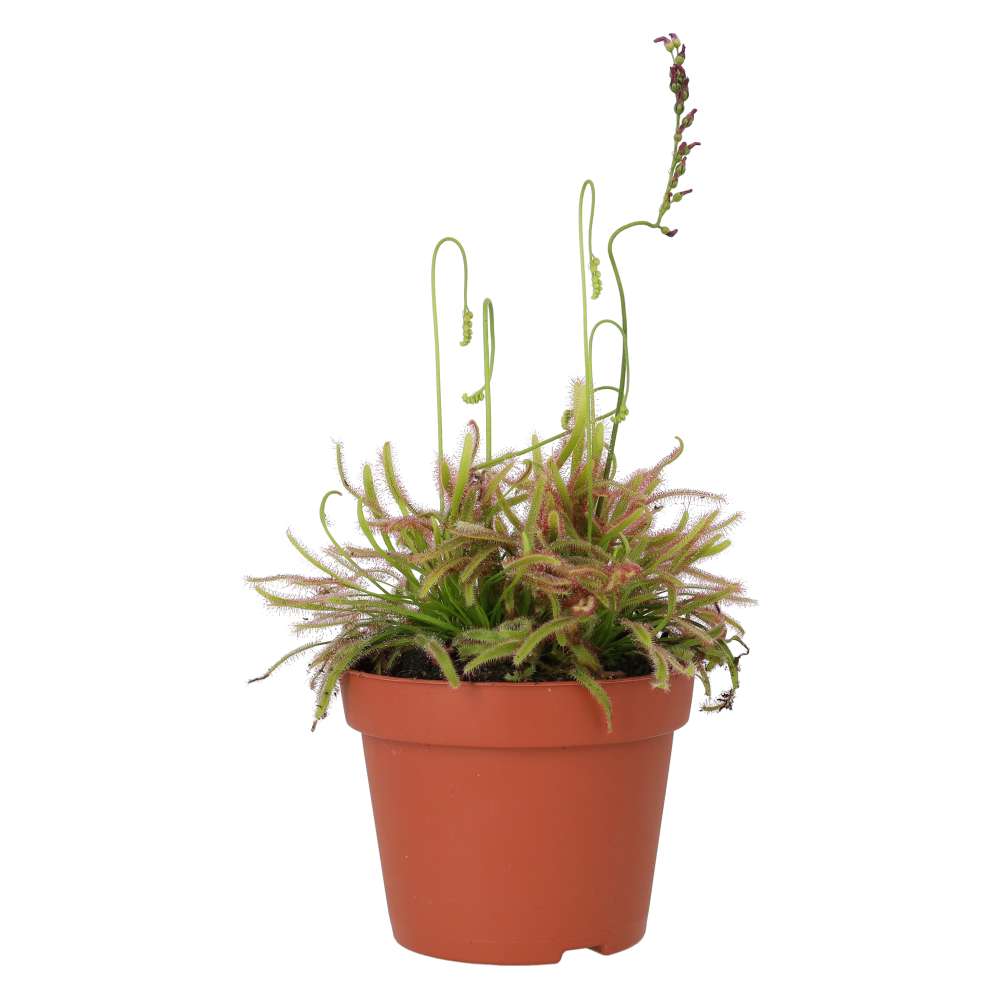
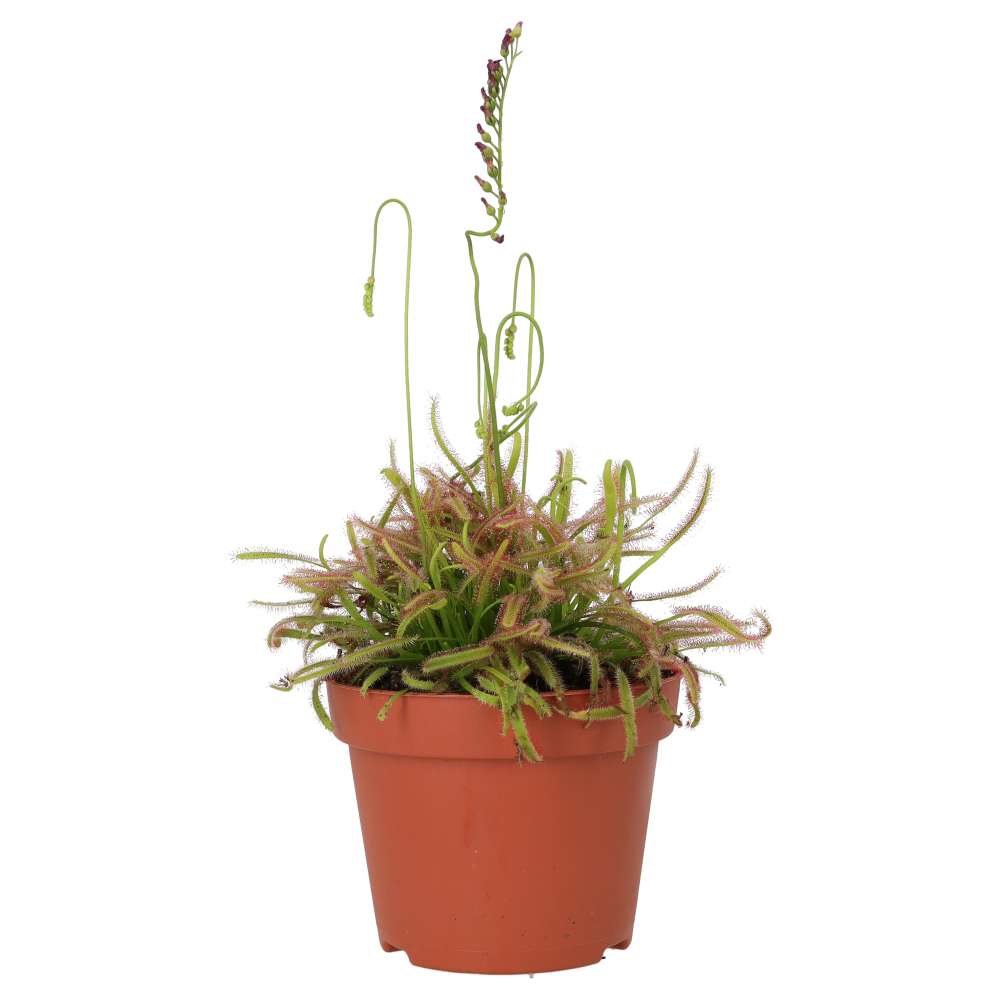
Cape Sundew
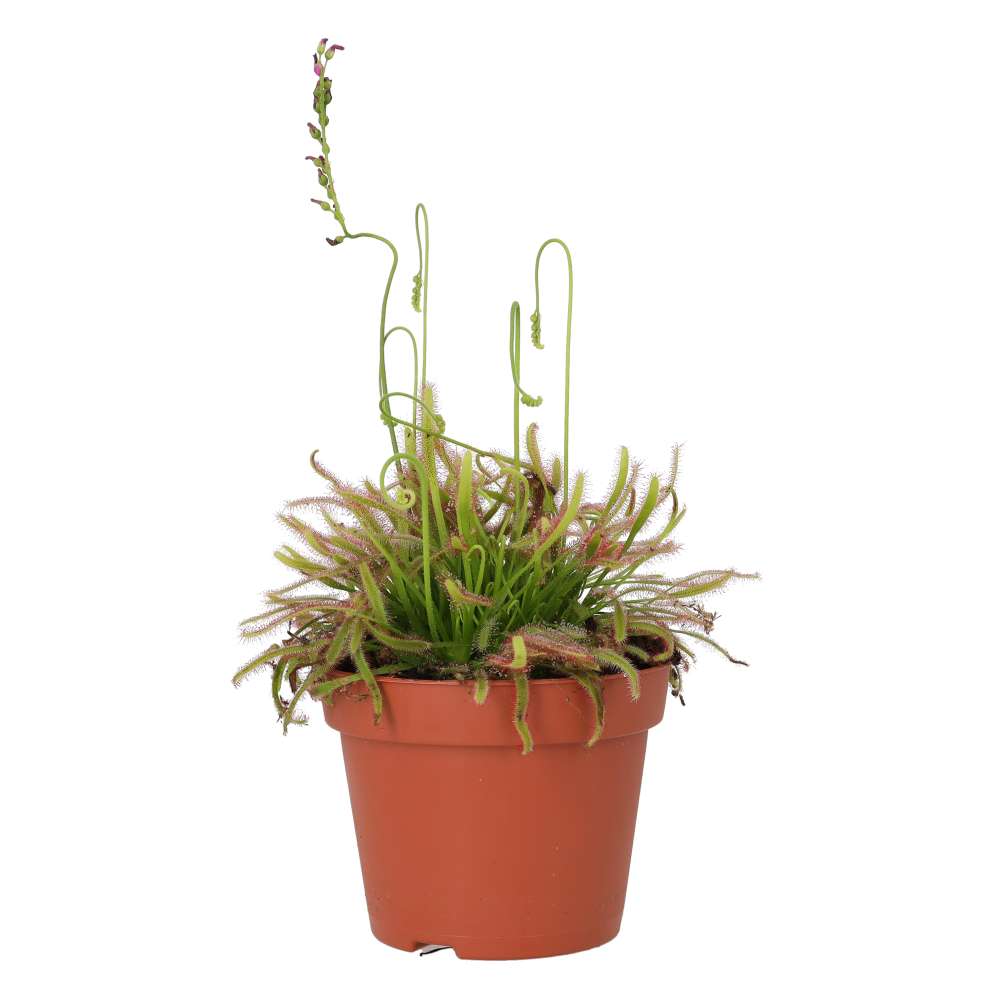
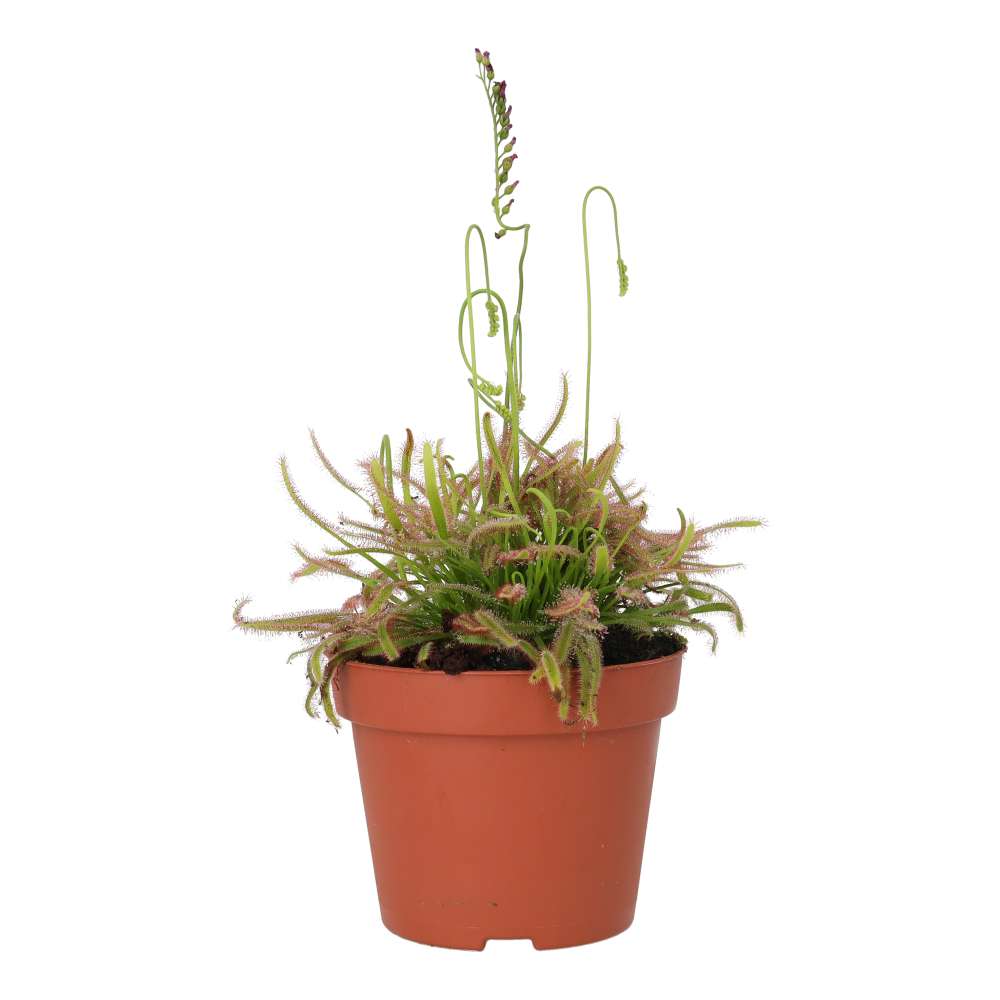
The Cape Sundew (Drosera capensis) is one of the easiest and most rewarding carnivorous plants to grow. Its long, graceful leaves are lined with sparkling droplets of sticky “dew” that attract and trap small insects. As the leaf curls around its prey, the plant absorbs valuable nutrients — a fascinating process that makes the Cape Sundew a favourite for both beginners and experienced keepers.
Natural History
Native to the Cape region of South Africa, this sundew thrives in sunny, open wetlands with nutrient‑poor, acidic soils. Because the soil offers very little nutrition, the plant evolved its glistening tentacles to catch insects. Cape Sundews are naturally hardy and adaptable, growing year‑round in warm conditions with regular rainfall and mineral‑free water sources. Their ability to curl their leaves around prey makes them one of the most active and engaging carnivorous plants.
Care Information
Cape Sundews are wonderfully simple to care for when their natural needs are met:
- Light: Bright light is essential. A sunny windowsill or strong grow light keeps the plant colourful, compact and covered in dew.
- Water: Always use demineralised water, rainwater or distilled water. Keep the soil consistently damp by standing the pot in a shallow tray of water.
- Soil: Use a carnivorous plant mix such as sphagnum peat moss with perlite. Avoid compost or fertiliser — these can burn the roots.
- Feeding: They catch their own insects. Indoors, you can offer the occasional tiny insect, but it’s not required.
- Dormancy: Cape Sundews do not need a winter dormancy. They grow happily all year with steady warmth and light.
With the right care, the Cape Sundew produces beautiful, dew‑covered leaves throughout the year and is a delightful, interactive plant that brings a touch of the wild into any home or terrarium.