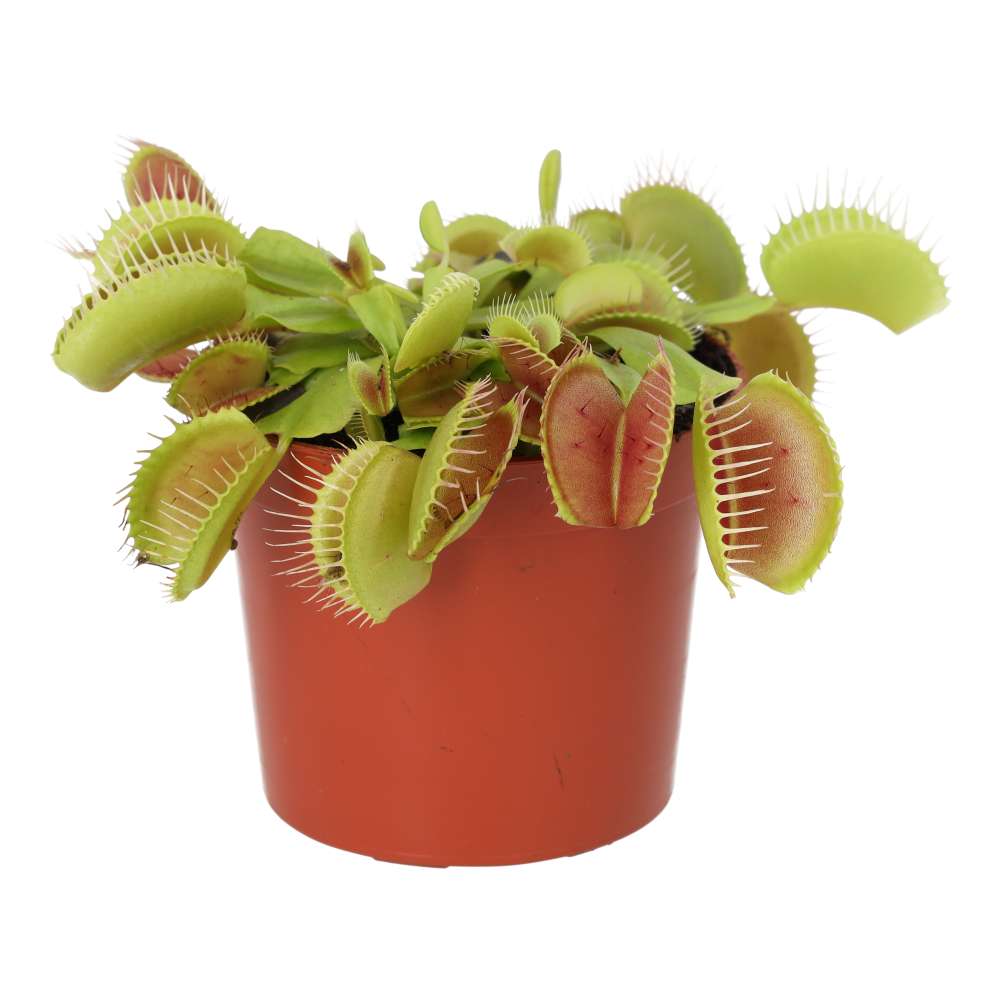
Venus Flytrap
The Venus Flytrap (Dionaea muscipula) is one of the world’s most iconic carnivorous plants, famous for its jaw‑like traps that snap shut when triggered. It’s a fascinating, interactive species that makes a brilliant addition to any plant collection, whether you’re a seasoned grower or just starting out.
Natural History
Native to the nutrient‑poor wetlands of North and South Carolina in the United States, the Venus Flytrap evolved its remarkable traps to supplement its diet with insects. Each trap has tiny trigger hairs; when touched twice, the trap closes, forming a living “stomach” that digests the prey. In the wild, they thrive in open, sunny bogs with acidic, mineral‑free soil and pure water sources such as rain and dew.
Care Information
Venus Flytraps are surprisingly easy to care for once you understand their natural needs:
- Light: They love bright light. A sunny windowsill or strong grow light keeps them healthy and colourful.
- Water: Always use demineralised water, rainwater or distilled water. Tap water contains minerals that can harm the plant. Keep the soil damp but not waterlogged.
- Soil: Use a carnivorous plant mix such as sphagnum peat moss with perlite. Never use compost or fertiliser — they can burn the roots.
- Feeding: They catch their own food. If kept indoors, you can offer the occasional small insect, but never feed meat or processed foods.
- Dormancy: Venus Flytraps need a winter rest period. During the colder months, growth slows and leaves may die back. Keep them cool and slightly drier until spring.