
Not sure this is the right species for your family? Read our guide Which reptile is best for my family?, which compares the five best beginner reptiles side by side.
About the western hognose snake
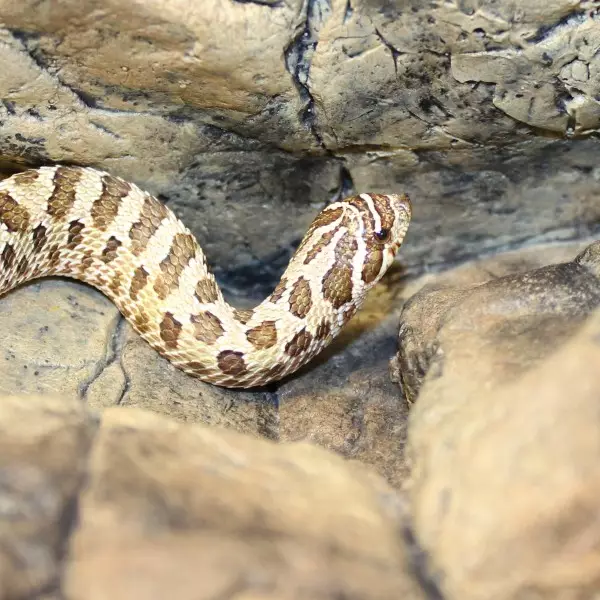
The western hognose snake (Heterodon nasicus) is one of the most characterful snakes you can keep. It has a short, stocky body and a cute upturned nose, which it uses like a shovel to dig through loose soil and sand. Hognose snakes stay small, are easy to look after and come in lots of colours and patterns, known as ‘morphs’. As a result, they’ve become one of the most popular pet snakes in the UK.
Wild western hognose snakes live on the dry prairies and scrubland of central North America, from southern Canada down through the Great Plains to northern Mexico. They like sandy or gravelly ground, where they can burrow easily, and they’re most active during the day.
They’re also famous for their dramatic defence display. When a hognose feels threatened, it flattens its neck like a cobra, hisses loudly and may strike with its mouth closed. If that doesn’t work, it may even roll over and play dead, with its tongue hanging out! It’s all bluff, and most hognose snakes soon settle down once they get used to you.
Females are much bigger than males. Females usually grow to around 60 to 75cm (2 to 2.5ft), and a few reach 90cm (3ft), while males rarely grow longer than about 50cm (20in). With good care, hognose snakes live for 15 to 20 years, so they’re a real long-term commitment.
What wild hognose snakes teach us about care
Everything in a good vivarium copies the wild:
- A warm spot and a cool end, like a sunny patch of open ground and the shade beneath the scrub
- UVB, because they’re active during the day and bask in patches of sun
- A deep, dry substrate to dig in, like the loose sandy soil of the prairie
- Lots of places to hide, so they always feel safe
- Dry conditions, as they come from open, dry habitats
- A diet of whole prey. In the wild they eat toads, frogs, lizards, eggs and small rodents, and in captivity they do well on mice
Hognose snakes spend a lot of time buried, especially when they’re settling in, after a meal and before a shed. So don’t worry if you don’t see your snake for a few days. It’s quite normal.
What size vivarium does a hognose snake need?
Hognose snakes spend most of their time on the ground and under it, rather than climbing. So floor space and a deep layer of substrate matter more than height.
- Males: a 3ft vivarium (90 x 45 x 45cm) gives a male plenty of room for a warm end, a cool end and several hides
- Females: we recommend a 4ft vivarium (120 x 45 x 45cm), as females grow much bigger. If you’re not sure whether your snake is male or female, choose the 4ft
Hatchlings are happy in an adult-sized vivarium from day one, as long as you give them plenty of small hides. A good rule of thumb is that if your snake can cross from one side of the vivarium to the other without showing itself, you have enough hides. Bigger is always better. Hognose snakes are good diggers, so always fit the vivarium lock, and make sure the vents are secure.
Choose your hognose snake setup
We’ve put together four complete setups, so you don’t have to work out what goes with what. Every kit includes UVB, daylight, a guarded basking lamp, a thermostat and a way to check your temperatures, so you have everything you need from day one. Each comes with a 3ft vivarium for males, or you can upgrade to a 4ft vivarium, for males or females, for £20 more.
| Setup | What you get | Best for |
|---|---|---|
| Budget | 3ft or 4ft vivarium, T5 UVB tube, LED daylight, dimming thermostat | Lowest cost, first-time keepers, warm homes |
| Bronze | 3ft or 4ft vivarium, Arcadia UVB and LED lighting, dimming thermostat, two timers | Better lighting and an automatic routine, warm homes |
| Silver | 3ft or 4ft vivarium, Arcadia UVB and LED lighting, smart app thermostat, thermo-hygrometer | Control from your phone, warm homes |
| Gold | 3ft or 4ft vivarium, Arcadia UVB and LED lighting, three-channel smart thermostat with timer, mini ceramic night heater | Cold or draughty homes, or the very best |
Not sure which to choose? Night heating is only needed in cold homes, where the temperature drops to 18ºC or below. If your home stays warmer than that, Budget, Bronze or Silver will do the job. If it gets colder, choose Gold. All four kits also suit African house snakes and Dione rat snakes. You’re also welcome to call us on 01865 372200 or visit the shop in Kidlington, and we’ll help you pick.
UVB lighting for hognose snakes
For years, people assumed snakes didn’t need UVB. We now know they benefit from it. UVB helps them make vitamin D3, and it encourages more natural behaviour. We’ve found that when hognose snakes are given UVB, they definitely use it. Hognose snakes are active during the day and bask in partial sun, so they’re a Ferguson Zone 2 species.
Mount a T5 UVB lamp at the warm end, alongside the basking lamp, so your snake gets warmth and UV in the same place. Always fit a guard over the lamp, so your snake can’t touch it or climb on it. How much UV actually reaches your snake depends on the lamp, the height of your vivarium, and how far the basking spot is from the lamp. So, if you can, check the output with a UV index meter at the spot where your snake will bask. For a Zone 2 species, aim for a UVI of around 1.1 to 3.0 there, fading to zero in the shade at the cool end. If you don’t have a meter, the lamp manufacturers publish guides showing which UVB lamp to use, and how far from your snake to mount it. Not sure which lamp is right for your vivarium? Ask our team, and we’ll help you choose. Keep the lights on for 12 to 14 hours a day, and off at night.
Heating and temperatures
Use a white basking lamp at one end to create a warm spot, controlled by a dimming thermostat so the temperature stays steady. Always fit a heat guard, so your snake can’t touch the hot bulb or coil around it. Your hognose will warm up under the lamp to digest its food and stay active, then move to the cooler end, or burrow down, when it’s warm enough.
| Area | Temperature |
|---|---|
| Basking spot (under the lamp) | 30–32ºC |
| Middle of the vivarium | Around 25ºC |
| Cool end | 20–24ºC |
| Night | No lower than 18ºC |
| Humidity | 30–50% (dry) |
Night heating is only needed in cold homes, where the temperature drops to 18ºC or below. If yours does, add a ceramic heater, such as the ReptiZoo Mini Ceramic Heater 35w, with a guard and on a thermostat. Always check your temperatures with a good digital thermometer. Never guess!
Substrate and decorating your vivarium
In the wild, hognose snakes live in open, sandy ground, where they spend a lot of time buried. A good vivarium copies that, giving your snake a deep, dry layer to dig through and plenty of places to hide.
Choosing a substrate
Hognose snakes love to burrow, so give them a layer of substrate at least 10cm deep. It should be dry, and loose enough to dig through, but firm enough to hold a tunnel.
- A mix of ProRep Coco Bedding and ProRep Bio Life Desert Substrate: this works really well. Together they make a natural, dry soil that’s great for digging and holds a burrow. It’s a good choice if you want a more natural look, or a bioactive vivarium. Read our guide to arid bioactive vivariums.
- A little leaf litter: scatter a thin layer over the top. It gives your snake cover to hide under, and looks natural. Keep it light, so the vivarium stays dry.
Avoid pure sand, as it doesn’t hold a burrow and can stick to food. Browse all our snake substrates.
Decorating the vivarium
- Plenty of hides. Hognose snakes feel safest when they’re tucked away. Give them at least one hide at the warm end and one at the cool end, so they can rest at the temperature they want. ProRep Cork Bark and ProRep Wooden Hides work well. For hatchlings, add some small hides too.
- A slightly damp area for shedding. Hognose snakes like it dry, but a little moisture helps them shed cleanly. When your snake is about to shed, lightly dampen a patch of substrate deep down at one end, or add a hide with slightly damp moss.
- A water bowl. Use a heavy, shallow bowl that won’t tip over when your snake digs around it, such as a White Python Water Bowl. Place it at the cool end, so it doesn’t raise the humidity too much.
- Plants and cover. Artificial plants add cover and colour, and are easy to keep clean. Real plants are a poor choice in a standard setup, as your snake will dig them up.
Stand heavy decor directly on the vivarium floor, then add the substrate around it, so it can’t collapse on your snake when it burrows underneath. See all our vivarium decorations.
What do hognose snakes eat?
In the wild, hognose snakes mainly eat toads and frogs, along with lizards, eggs and small rodents. In captivity, they do well on frozen and thawed mice. Whole prey contains everything they need, so they don’t need extra calcium or vitamin supplements.
| Age | What to feed | How often |
|---|---|---|
| Hatchlings | Pinkie mice | Every 5 to 7 days |
| Juveniles | Fuzzies, then small hoppers | Every 7 days |
| Adult males | Hoppers or small adult mice | Every 7 to 10 days |
| Adult females | Adult mice | Every 7 to 14 days |
Choose prey that’s no wider than the widest part of your snake’s body, and increase the size of the food as your snake grows. To defrost frozen food, put it in a plastic box in the fridge overnight, so it’s fully thawed by feeding time. Always use feeding tongs to offer the food. Hognose snakes have a very strong feeding response, and they can easily mistake a hand that smells of food for dinner. Hognose snakes can easily become overweight, so don’t be tempted to overfeed. If you’re not sure, bring your snake in, and we’ll check its condition.
Some hognose snakes, especially hatchlings, can be fussy at first. If yours refuses a mouse, try rubbing it with a little tinned tuna or salmon (in spring water, not brine or oil), as the fishy smell is closer to their natural prey. Most soon learn to take mice without it.
Don’t handle your snake for 48 hours after a meal, as this can make it bring its food back up. It’s normal for hognose snakes to eat less, or stop eating, before a shed and in winter. Adult males in particular often go off their food for a while in late winter and spring.
Handling your hognose snake
Hognose snakes are usually easy to handle once they’ve settled in. Give a new snake a week or so to settle before you start. Then pick it up gently from underneath, support its body, and let it move through your hands, rather than holding it tightly. Start with short sessions of a few minutes, and build up as your snake gets used to you.
Young hognose snakes often put on their defence display at first, hissing, flattening their necks and bluff striking. Stay calm and gentle, and the display usually stops quickly. Most become very easy to handle with regular, gentle handling.
Hognose snakes are rear-fanged, with a very mild venom. They aren’t considered dangerous to people, and bites are rare, as they almost always bluff with their mouth closed. However, a hognose that bites because it thinks you’re food may hang on and chew, which can cause some swelling and itching. So always wash your hands before handling, especially after touching food, and use tongs at feeding time. If you’re bitten, gently remove the snake, wash the area well, and speak to a doctor if you have any concerns.
Avoid handling for 48 hours after feeding, and when your snake’s eyes turn milky blue before a shed, as it can’t see well and may be more defensive. Always wash your hands before and after handling.
Water, shedding and cleaning
Give fresh water every day. Hognose snakes don’t usually soak, so the bowl doesn’t need to be big, but it should be heavy enough not to tip over.
Young hognose snakes shed every few weeks as they grow, and adults every 1 to 2 months. A few days before a shed, the eyes turn milky blue and the colours look dull. The skin should come off in one piece. Keep the vivarium dry most of the time. When your snake is getting ready to shed, lightly dampen a patch of substrate or the moss in a hide, as this gives it the extra moisture it needs. If the skin comes off in bits, or stays stuck to the tail tip or eyes, check your humidity. Read our guide to snake shedding problems for more help.
Spot clean every day to remove any poo and soiled substrate. Then, every 6 to 8 weeks, do a full clean out. Replace the substrate and scrub all the decor with a reptile-safe disinfectant. Our guide how to clean your vivarium takes you through it step by step.
Your hognose snake care routine, step by step
Once your vivarium is set up, looking after a hognose snake only takes a few minutes a day. Here’s the routine we recommend.
Every morning
- Check the lights have come on. Put the basking lamp and UVB on a timer, so they run for 12 to 14 hours a day.
- Check the temperatures. Once the vivarium has warmed up, look at your thermometer. Aim for 30–32ºC at the basking spot and 20–24ºC at the cool end.
- Spot clean. Remove any poo and soiled substrate.
- Refresh the water. Rinse the bowl and fill it with fresh water.
Every evening
- Do a quick health check, if your snake is out. It should be alert, with clear eyes (unless it’s about to shed), and no bumps or stuck skin. Don’t dig it up just to check on it.
- Lights off. Your timer should switch off the basking lamp and UVB, so your snake has a dark, cooler night.
- Check the night temperature. If your room drops to 18ºC or below, use a ceramic heater on a thermostat.
Every week
- Feed your snake, if it’s due. See what do hognose snakes eat for how often.
- Wash the water bowl with a reptile-safe disinfectant, then rinse well.
- Check your equipment. Make sure the thermostat probe is still in place, all the lamps are working, and the lock and vents are secure.
Every month
- Weigh your snake on kitchen scales, and write it down. Steady weight loss is often the first sign that something is wrong, and steady gain can mean you’re overfeeding.
Every 6 to 8 weeks
- Do a full clean out. Replace the substrate and scrub all the decor with a reptile-safe disinfectant.
Every year
- Replace the UVB tube. UVB output fades long before the tube stops lighting up, so change it every 12 months, or as the manufacturer recommends.
If your snake stops eating for a long time outside of shedding or winter, loses weight, has trouble shedding, or has runny eyes, bubbles from the mouth or noisy breathing, contact a reptile vet. You’re also welcome to call us on 01865 372200 for advice.
Hognose snake FAQs
How big do hognose snakes get?
Females usually grow to 60 to 75cm (2 to 2.5ft), and a few reach 90cm (3ft). Males are much smaller, and rarely grow longer than about 50cm (20in).
How long do hognose snakes live?
With good care, hognose snakes live for 15 to 20 years.
Are hognose snakes venomous?
They’re rear-fanged, with a very mild venom, but they aren’t considered dangerous to people. Bites are rare, and usually happen when a snake mistakes a hand that smells of food for dinner. A bite may cause some local swelling and itching, so wash your hands before handling and always use tongs at feeding time.
Why is my hognose snake playing dead?
Playing dead is a natural defence. If a hognose feels threatened, it may hiss, flatten its neck, then roll onto its back with its tongue out. Leave it alone somewhere quiet, and it will soon turn itself back over. As your snake gets used to you, it should happen less and less.
Do hognose snakes need UVB?
They benefit from it. Hognose snakes are a Ferguson Zone 2 species, so aim for a UVI of around 1.1 to 3.0 where they bask, fading to zero in the shade. Check it with a UV index meter, or follow the lamp manufacturer’s guide for the right lamp and mounting height. If you’re not sure, ask our team for help.
What size vivarium does a hognose snake need?
We recommend a 3ft vivarium (90 x 45 x 45cm) for a male, and a 4ft vivarium (120 x 45 x 45cm) for a female. Bigger is always better.
Why won’t my hognose snake eat?
It’s common for hognose snakes to refuse food before a shed, in winter, or for a week or two after moving to a new home. Adult males often stop eating for a while in late winter and spring. Check your temperatures are right and that your snake has enough hides. You can also try scenting the mouse with tinned tuna or salmon. If it refuses food for more than a few weeks, or is losing weight, give us a call or see a reptile vet.
More hognose snake guides
- Snake having problems shedding its skin?: what to do about stuck shed
- How to clean your vivarium: a step-by-step guide
- Arid bioactive vivariums: how to set one up and look after it
- African house snakes: another small, easy snake that suits the same setups
- Ferguson zones explained: how much UVB your reptile needs
- Which reptile is best for my family?: compare the five best beginner reptiles
- Reptile boarding: going away? We can look after your snake
Suggested reading
Want to learn more? These are good places to start:
- Ferguson zones explained. Our guide to the UVB needs of different reptiles.
- Your local reptile vet. For health questions, a vet with exotic animal experience is always the best source.
Care guide question
If you have any questions or are interested in learning more please complete this form.